

Listing Courtesy of: GULF SOUTH / Listed By: Dawnne Keeney, Crescent Sotheby's International Realty; Douglas Adams, Crescent
17523 La Hwy 418 Highway Lettsworth, LA 70753
Active (80 Days)
$1,875,000 (USD)

Description
MLS #:
2548608
2548608
Lot Size
12.88 acres
12.88 acres
Type
Single-Family Home
Single-Family Home
Year Built
1849
1849
Style
Victorian
Victorian
County
Pointe Coupee Parish
Pointe Coupee Parish
Listed By
Dawnne Keeney, Crescent Sotheby's International Realty
Douglas Adams, Crescent Sotheby's International Realty
Douglas Adams, Crescent Sotheby's International Realty
Source
GULF SOUTH
Last checked Jun 13 2026 at 4:55 AM GMT+0000
GULF SOUTH
Last checked Jun 13 2026 at 4:55 AM GMT+0000
Bathroom Details
- Full Bathrooms: 4
- Half Bathrooms: 2
Interior Features
- Dishwasher
- Microwave
- Range
- Refrigerator
- Oven
- Dryer
- Washer
- Attic
- Pull Down Attic Stairs
- Guest Accommodations
Lot Information
- Acreage
- City Lot
- Oversized Lot
- Irregular Lot
Property Features
- Fireplace: Gas
- Foundation: Raised
Heating and Cooling
- Central
- Multiple Heating Units
- Central Air
Pool Information
- Salt Water
- In Ground
Exterior Features
- Roof: Metal
Utility Information
- Utilities: Water Source: Public
- Sewer: Septic Tank
- Energy: Water Heater
Parking
- Detached
- Carport
Stories
- 2
Living Area
- 5,500 sqft
Listing Price History
Date
Event
Price
% Change
$ (+/-)
Apr 23, 2026
Price Changed
$1,875,000
-11%
-$225,000
Mar 24, 2026
Listed
$2,100,000
-
-
Location
Estimated Monthly Mortgage Payment
*Based on Fixed Interest Rate withe a 30 year term, principal and interest only
Listing price
Down payment
%
Interest rate
%Mortgage calculator estimates are provided by Crescent Sotheby's International Realty and are intended for information use only. Your payments may be higher or lower and all loans are subject to credit approval.
Disclaimer: Copyright 2026 Gulf South Real Estate Information Network. All rights reserved. This information is deemed reliable, but not guaranteed. The information being provided is for consumers’ personal, non-commercial use and may not be used for any purpose other than to identify prospective properties consumers may be interested in purchasing. Data last updated 6/12/26 21:55



The mansion served as headquarters for General Nathaniel P. Banks during the Red River Campaign. Listed on the National Register of Historic Places in 1977, its significance is architectural and historical.
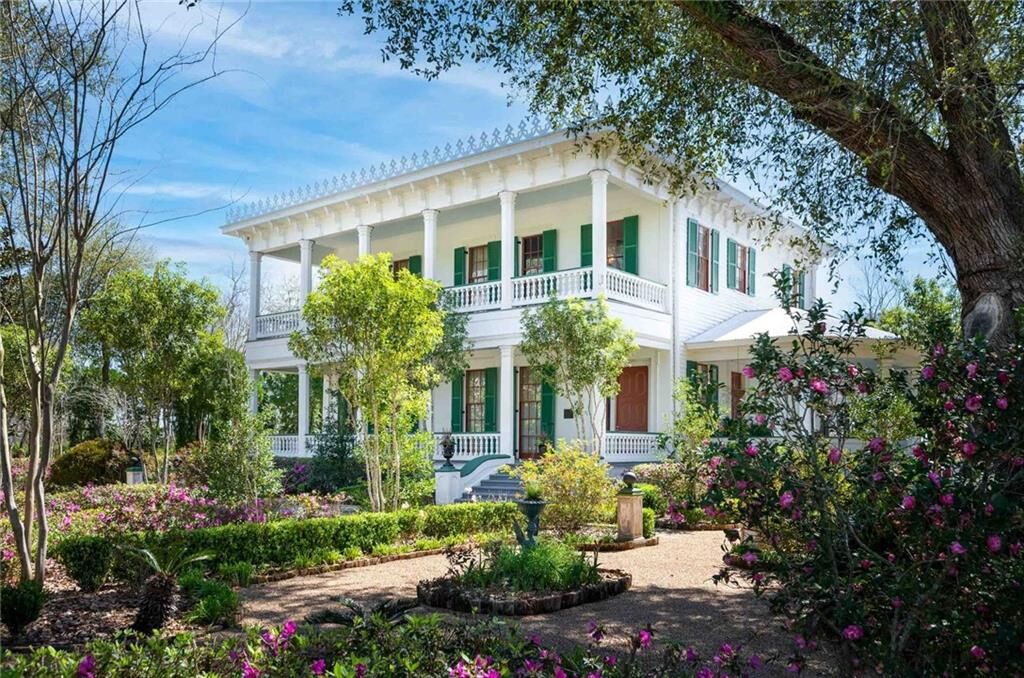
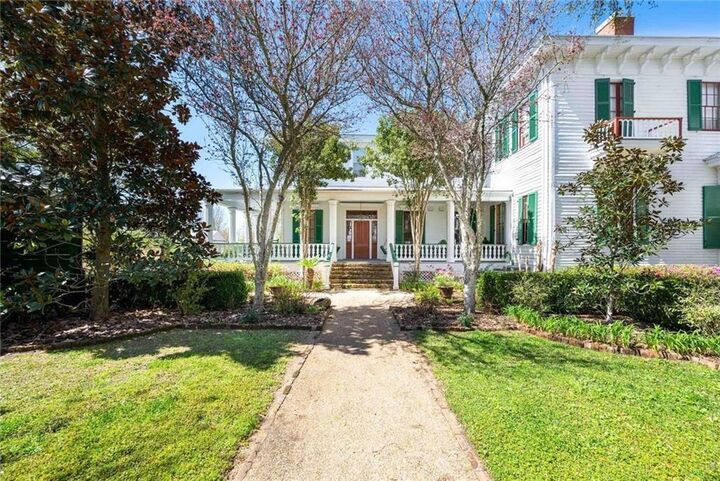
Built in 1848–49 and attributed to Henry Howard, the Louisiana architect behind Nottoway and Madewood, White Hall rises from the riverbank as a rare survivor of war and time.
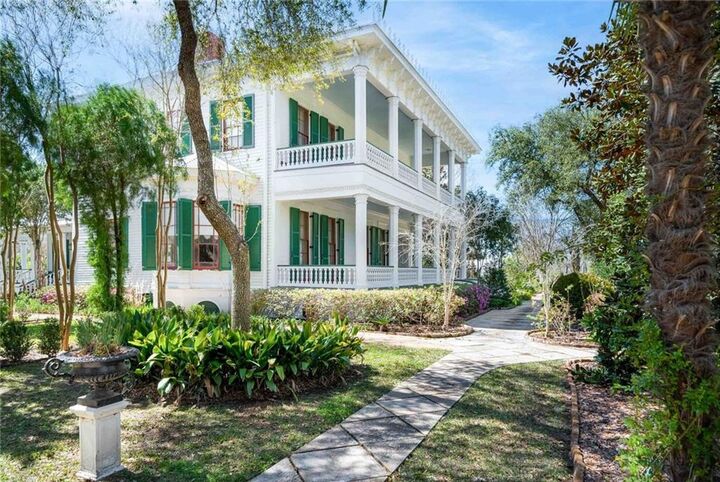
Constructed of cypress, pine, and handmade brick, the house expresses Greek Revival form with Italianate influence. Fourteen-foot ceilings crown double parlors and broad galleries; long-leaf pine floors—some knot-free boards 22 feet in length—adorn interiors defined by dentil cornices, ceiling medallions, decorated archways, and a pentagonal bay window. Elaborate hanging lamps original to the house, discovered decades later in a Plaquemine barn, have been restored and returned to the foyer and main stair. These complement the full 19th century antique furnishings including two Charles Lee four poster beds.
Saved and moved by loving owners in 1912 and again in 1939 to escape the advancing river, the home still faces the Atchafalaya. The 13.88-acre grounds include a crepe myrtle allée inspired by Mary Simmes’s Civil War–era diaries as part of extensive period gardens, mature pecan and oak trees, historically accurate plantings, a saltwater pool, and recreated dependencies including a kitchen cottage and restored schoolhouse.
Since 2002, rehabilitation has followed the Secretary of the Interior’s Standards of Historic Preservation, integrating updated plumbing, electrical, HVAC, generator, and public water while preserving architectural integrity.
White Hall stands prepared for its next steward.